


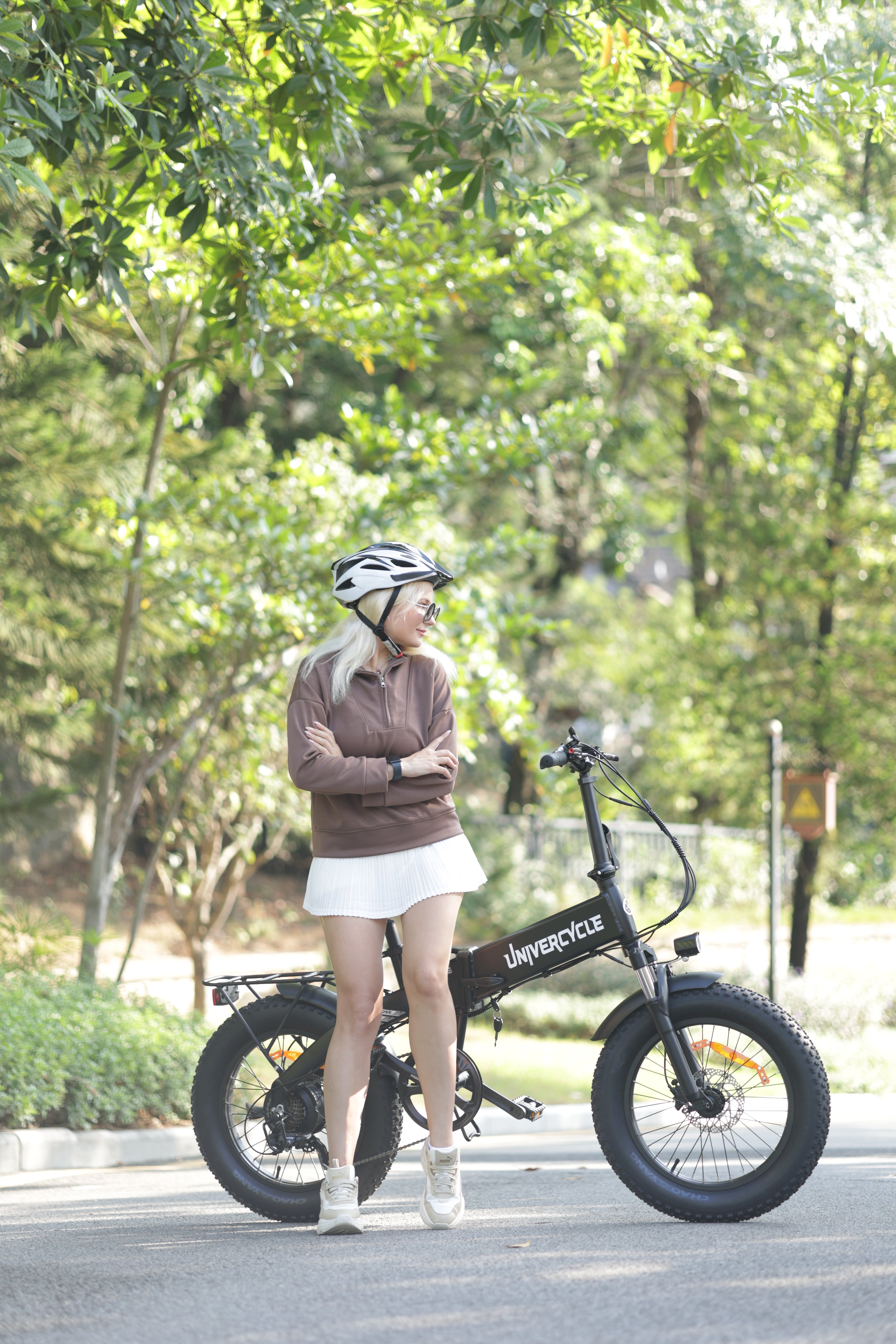
Everything beginners and commuters in Europe & North America want to know
Electric bikes (e-bikes) have become one of the fastest-growing mobility trends in Europe, the U.S., and Canada. From foldable e-bikes for city commuters to fat tire e-bikes for outdoor riders, people are searching on Google every day for answers to the same set of questions.
In this guide, we break down the most frequently asked e-bike questions on Google, using real search data and rider feedback.
Clear, simple, and beginner-friendly — perfect for anyone considering their first e-bike.
1. What Is an E-Bike and How Does It Work?
An e-bike is a bicycle equipped with an electric motor and a rechargeable battery.
You still pedal, but the motor gives you pedal assistance, making hills easier and commutes faster.
Most e-bikes use:
-
Hub motors (rear wheel for stability and smooth acceleration)
-
Lithium-ion batteries (36V, 48V, or 52V depending on power)
-
Pedal assist levels (PAS 1–5)
-
Optional throttle (depending on local laws)
In Europe (EU/UK), e-bikes are typically limited to:
-
250W motors
-
25 km/h max assistance
In the U.S. and Canada, Class 2/3 e-bikes can offer:
-
500W–750W motors
-
Throttle mode
-
Up to 45 km/h (28 mph)
2. How Far Can an E-Bike Go on One Charge?
Google’s most-searched question: “How many miles/km can an e-bike go?”
Real-world e-bike range depends on:
-
Battery capacity (Ah / Wh)
-
Motor power
-
Rider weight
-
Terrain (hills vs flat)
-
Tire type (city tires vs fat tires)
-
Assist level used
Typical ranges:
| E-Bike Type | Battery | Real-World Range |
|---|---|---|
| City / Commuter | 36V–48V / 10–15Ah | 40–70 km (25–45 miles) |
| Fat Tire | 48V / 15–20Ah | 60–90 km (37–55 miles) |
| Long-Range Touring | Dual battery | 100–150+ km (62–90 miles) |
| Foldable E-Bike | 48V / 12.5–14Ah | 30–55 km (18–35 miles) |
A good rule of thumb:
👉 Each 1Ah = 6–7 km of real range (48V battery)
3. Are E-Bikes Legal in My Country?
This is one of the biggest concerns for beginners.
Europe (EU countries + UK)
Legal as long as:
✔ 250W motor
✔ 25 km/h assist limit
✔ Pedal assist only (no throttle)
Countries like Italy, Germany, France, Spain, and the UK follow the EN15194 standard.
United States
Legal status depends on “Class System”:
-
Class 1: Pedal assist only, max 20 mph
-
Class 2: Pedal assist + throttle, max 20 mph
-
Class 3: Pedal assist, 28 mph max
Most states allow e-bikes on bike lanes and streets.
Canada
Similar to U.S. but varies by province; throttle allowed in many regions.
4. How Long Does an E-Bike Battery Last?
Batteries have two lifespans:
A) Single-charge lifespan
3–7 hours depending on usage.
B) Total life cycles
Most lithium-ion packs last 600–800 cycles before dropping to 70–80% capacity.
Typical real-world expectation:
👉 3–5 years with normal commuting.
Tips to extend battery life:
-
Don’t leave the battery fully empty
-
Avoid extreme heat/cold
-
Charge to 80–90% when possible
-
Store indoors
5. How Much Does an E-Bike Cost?
Google searches like “Are e-bikes expensive?” or “Is an e-bike worth the money?” are very common.
Here’s the 2025 price landscape:
| Category | Price Range | Notes |
|---|---|---|
| Entry-level commuter | $600–$999 | Basic range, mechanical brakes |
| Mid-range city / foldable | $1000–$1600 | Best value for daily use |
| Fat tire / all-terrain | $1300–$2000 | Big battery, hydraulic brakes |
| Premium brands | $2500–$6000+ | Bosch, Shimano, Yamaha |
6. Are Fat Tire E-Bikes Better?
This is another trending Google question.
Advantages:
-
More stable on gravel, snow, sand
-
Better shock absorption
-
Safer for beginners
-
Great for heavier riders
-
High torque uphill performance
Downsides:
-
Heavier
-
Slightly shorter range
-
Slower acceleration on pavement
Best for:
👉 Riders who want comfort + stability
👉 Outdoor riders
👉 Urban riders who deal with rough roads or rain
7. What’s the Difference Between 250W, 500W and 750W?
250W (Europe standard)
-
Smooth acceleration
-
Suitable for flat city roads
-
Legal anywhere
-
Efficient & reliable
500W (U.S./Canada mid-range)
-
More torque
-
Better for hills
-
Faster acceleration
750W (Fat tire / all-terrain)
-
Strong hill climbing
-
Great for heavier riders
-
Popular for outdoor adventures
If you live in Europe → choose 250W
If you live in the U.S./Canada → 500–750W is ideal
8. Do I Need a License or Insurance?
Europe
✔ No license
✔ No insurance required
✔ No registration
(As long as the e-bike meets 250W / 25km/h rule)
United States / Canada
Depends on local laws, but most states/provinces:
✔ No license
✔ No registration
Sometimes recommended:
-
Third-party liability insurance
-
Theft insurance
9. Can I Ride an E-Bike in the Rain?
Yes, most e-bikes are built with IP-rated water resistance.
Examples:
-
IPX4: rain resistant
-
IPX5: heavy rain resistant
Tips:
-
Avoid pressure washing
-
Dry the battery port before charging
-
Store the bike indoors
10. Is a Foldable E-Bike Worth It?
Google search volume for this is skyrocketing.
Foldable e-bikes are ideal for:
✔ Apartment living
✔ Public transport
✔ Car commuters
✔ RV & camping
✔ Easy storage
But not ideal for:
✘ Long-distance touring
✘ Extreme off-road
✘ Heavy riders
If portability matters → foldable is the best solution.
If comfort/power matters → fat tire is best.
🧩 Conclusion: Choosing the Right E-Bike
The best e-bike depends on your lifestyle:
Choose a city commuter if you want:
✔ Lightweight
✔ Urban mobility
✔ Daily commuting efficiency
Choose a fat tire e-bike if you want:
✔ Stability
✔ Comfort
✔ Outdoor riding
✔ All-terrain performance
Choose a foldable e-bike if you want:
✔ Easy storage
✔ Car trunk portability
✔ Apartment-friendly setup
If you’re still unsure, feel free to check our detailed model guides or contact us for personalized recommendations.
Share:
How to Choose the Right E-Bike for Your Commute